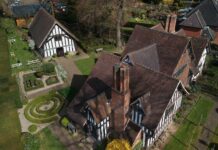



Wonderful archive photographs and stories of what life was like in Bournville’s almshouses have been released to mark their 125th anniversary.
Bournville Village Trust has worked with the University of Birmingham to uncover and explore the history of Bournville’s almshouses, known as the Quadrangle.
Opened in 1899, Bournville’s almshouses were developed as an alternative to notoriously harsh workhouses, where people who had little to no money were forced to live.
Early residents included husband and wife Mark and Martha Glasser, who arrived in 1916. They later lost all their modest savings in the collapse of Farrow’s Bank, a notorious fraud that affected thousands who had invested small but significant savings. The almshouses became a lifeline for them.
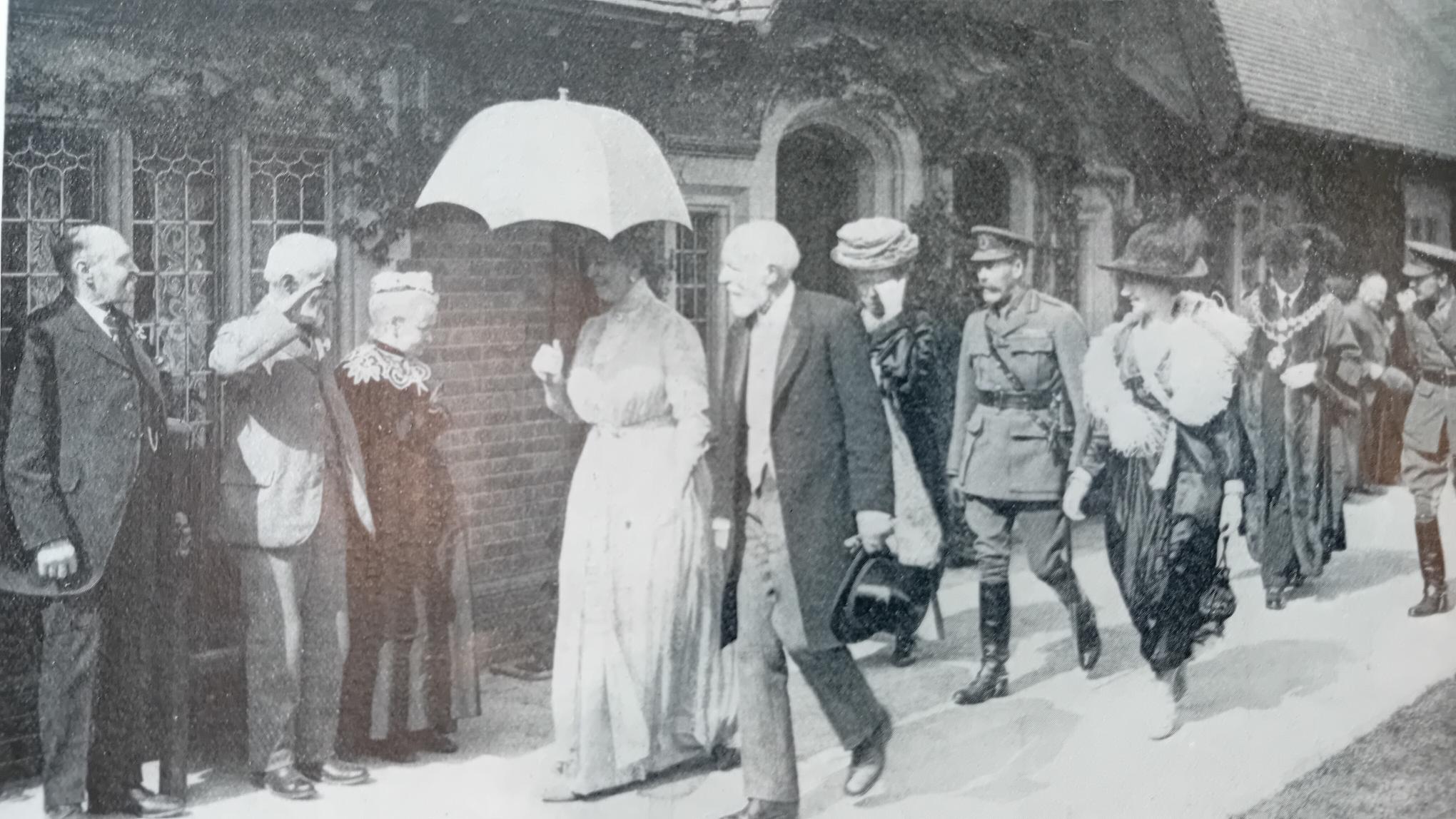
Other residents included Emma Tutin who moved to the almshouses between 1901 and 1911. Her father had been a coachman for King George V’s father King Edward VII, and she was pictured meeting him when he visited Bournville in 1919.
Today Bournville’s almshouses, on Mary Vale Road, are managed by charity Bournville Village Trust through the Bournville Almshouses Trust, and they continue to provide 33 independent living bungalows in a thriving community.


Daniel Callicott, Heritage Manager at Bournville Village Trust, said: “There was very little social safety net at the end of the 19th century and older people with little money or savings had no state pension to support themselves.
“Faced with nowhere to live and unable to work, many had no choice but to enter the workhouse, a notoriously harsh institution. Richard Cadbury saw almshouses as an alternative to this and Bournville’s version, which he spearheaded, offered well-built, safe and warm homes for older people with little money.”
Arthur Tsang, Director of Communities at Bournville Village Trust, said: “Almshouses are thought to be Britain’s oldest charitable associations and we are incredibly proud that Bournville’s almshouses are celebrating their 125 anniversary this year.
“Today, Bournville’s almshouses continue to provide low-cost homes for older people, providing independence, safety and a strong sense of community.”
Dr Jacob Fredrickson, Department of History, School of History and Cultures at the University of Birmingham, said: “It has been a tremendous privilege to learn more about the lives of those who have called the almshouses home over the last 125 years.
“As with any home, the almshouses have born witness to love, generosity and friendship as well as grief, heartbreak and loneliness. While the almshouses are an iconic Bournville building, they have always been, and remain, firstly a home, shaped as much by the residents themselves as by staff and trustees.”
In Britain there are around 6,000 active almshouse charities, housing more than 36,000 people. Many provide housing specifically for older people, but others offer affordable homes to families, students, refugees and care-leavers.
Bournville’s almshouses are one of the area’s most iconic buildings and were designed by Ewan Harper, well known for his design of the Birmingham Methodist Hall on Corporation Street.
Research into Bournville’s almshouses came about from a new partnership between the University of Birmingham and Bournville Village Trust.
Their joint ‘Utopias in Crisis’ project brings together academics at the University, Bournville Village Trust and local residents to work together to research Bournville’s past and showcase its heritage in new ways to new audiences.
It aims to uncover new histories of Bournville that stretch beyond its famous founders, George and Richard Cadbury, and focus on the people who made the ‘factory in a village’ their home.
Bournville Village Trust was founded by George Cadbury in 1900 and is one of the Midlands longest-serving independent charitable trusts. It manages estates, provides homes, delivers community-support services and commercial activities.
B31 Voices is run by volunteers and is committed to supporting communities across south west Birmingham and surrounding by keeping them informed and engaged. Follow us on Facebook, Twitter, Instagram, TikTok and YouTube. Support us by donating at www.b31.org.uk/donate. Send us local story ideas to hello@b31.org.uk